





Earth Data

Act now, and we can put it right


If you want more information, please contact us at info@newtreeimpact.com

Increasing World Population (in Billions)

Growing population at such a staggering rate can be seen as the root cause of many problems arising today or threaten to arise in near future. The population is expected to rise by 25% from 7.8 Billion in 2020 to 9.7 Billion in 2050, a rate which is highly unprecedented when compared with survival drivers like arable land, natural resources, etc.

CO2 emissions (K gigatonnes CO2 equivalent/yr)

In the time of crisis, when the world comes at a stop the CO2 emissions goes down (like in 2008 & 2019 Covid), but as soon as things get back to normal, those emissions starts increasing multifold. As we all know, CO2 acts as a greenhouse gas and can absorb & emit infrared radiation. The constant check to keep CO2 emissions at lowest, is one of the major driver in dealing with the climate change.

Per Capita Meat production (Kg/Y)

Production of a single ounce of meat requires significant amount of natural resources and also has to handle the methane gas emission from Cows (20% of total methane gas emission). Reduced per capita meat production, between 2018 & 2020, a decline of about 5.7% was likely because of an outbreak of African swine fever in China that reduced the pork supply.

Ruminant Livestock Numbers (billion individuals)

Never have we seen the world ruminant livestock numbers soaring past 4 billion, which represents much more mass than all human and animals combined. We can agree that although these are important source of protein & livelihood, but they are also a significant contributor to environmental challenges like methane and CO2 emissions, deforestation & water usage.

Global Monthly Mean CH4 (CH4 ppb)

One of the most dangerous GHG, Methane, set new year-to-date records for atmospheric concentration for years 2020 and 2021. Methane traps 86 times more heat in the atmosphere that CO2 and 20% of planet warning can be contributed to Methane. All five of the hottest years on record has happened since 2015, which shows the direct relation between the earth's temperature & GHGs.

Global tree cover loss (MHa/Y)

World lost 1.6 million hectares of undisturbed forest land last year (2020), up 7% of 2019, according to the Global Forest Watch. Losses in the tropics have now increased for two years in a row, driven mostly by forest clearance for agriculture. The EU and UK government are considering using trade deals and regulations to apply pressure on countries such as Brazil (most forest loss in 2019-2020) to curb deforestation.

Energy Consumption (Exajoules/yr)

Fossil fuel energy consumption has decreased since 2019 (COVID-19). However, these declines appear to be transient and projected to rise again from 2021. Conversely, solar and wind power consumption increased by 57% from 2018 to 2021, but it's still 19 times lower than fossil fuel. Although we can see the increasing trend in Solar/Wind energy, the rate of increase for other conventional fossil fuels energy sources is comparatively higher.

Ubees

FR Agri-Tech
  • €344,000
  • Louis Delelis-Fanien
  • Capital Raised: €8,000,000

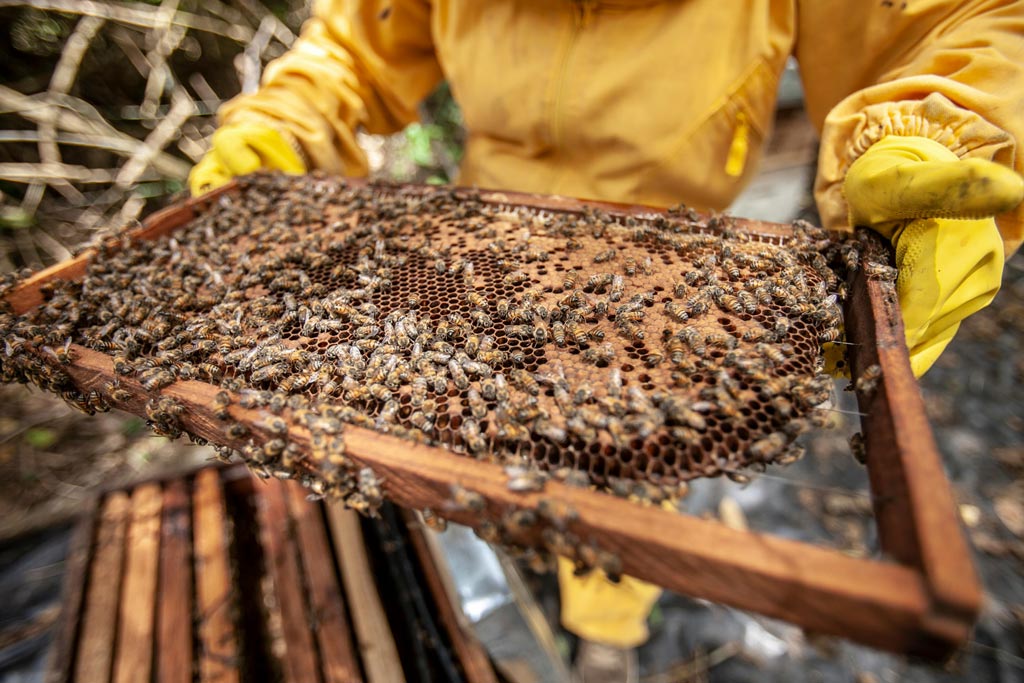
Ubees was founded in 2017 with the mission of professionalizing and scaling pollination services. Ubees positions itself as a “pollination-as-a-service” company offering global brands a turnkey solution to enhance biodiversity, increase crop yields, and build sustainability credentials. Its service combines proprietary hive technology, local beekeeper training, and digital monitoring tools. Ubees brings industrial-grade processes, transparency, and measurable outcomes.

Ubees operates a multi-layered business model designed to capture value across the pollination and biodiversity value chain with a diversified platform approach, combining hive leasing, honey sales, and brand partnerships. This model has resonated with large consumer goods companies — Nestlé, Nespresso, and Guerlain among them — who are increasingly under pressure to demonstrate biodiversity outcomes in their supply chains.


Problem they solve

  • Farmers seek yield stability and incremental income. A 15–20% crop yield increase plus honey resale is a compelling financial incentive.
  • Rising food demand, climate volatility, and the intensification of agriculture have increased the dependency on managed pollination.
  • The economic value of pollination is estimated in the hundreds of billions of dollars annually, making its fragility a systemic risk to food security.


Why we believe

  • Ubees’ technology has shown the potential to increase crop yields (15-20% as per case studies), directly improving economics and making adoption commercially attractive.
  • By enabling better monitoring and early detection of stress factors (e.g., disease, environmental risks), Ubees helps reduce colony losses — a critical pain point in modern apiculture..
  • The partnerships with established brand has embed Ubees in corporate sustainability reporting cycles, creating multi-year stickiness that is difficult for competitors to dislodge.
  • Consolidated and consistent revenue growth showing positive adoption signs and path to profitability.

Investors

Want to join us on our mission to fight climate change through Agri-Food revolution and discuss our value proposition?

Contact us

Entrepreneurs

We know taking the next big step is never easy, but if the goals are mutual, things do fall into place. Let’s discuss your idea!

Submit your proposal